Introduction
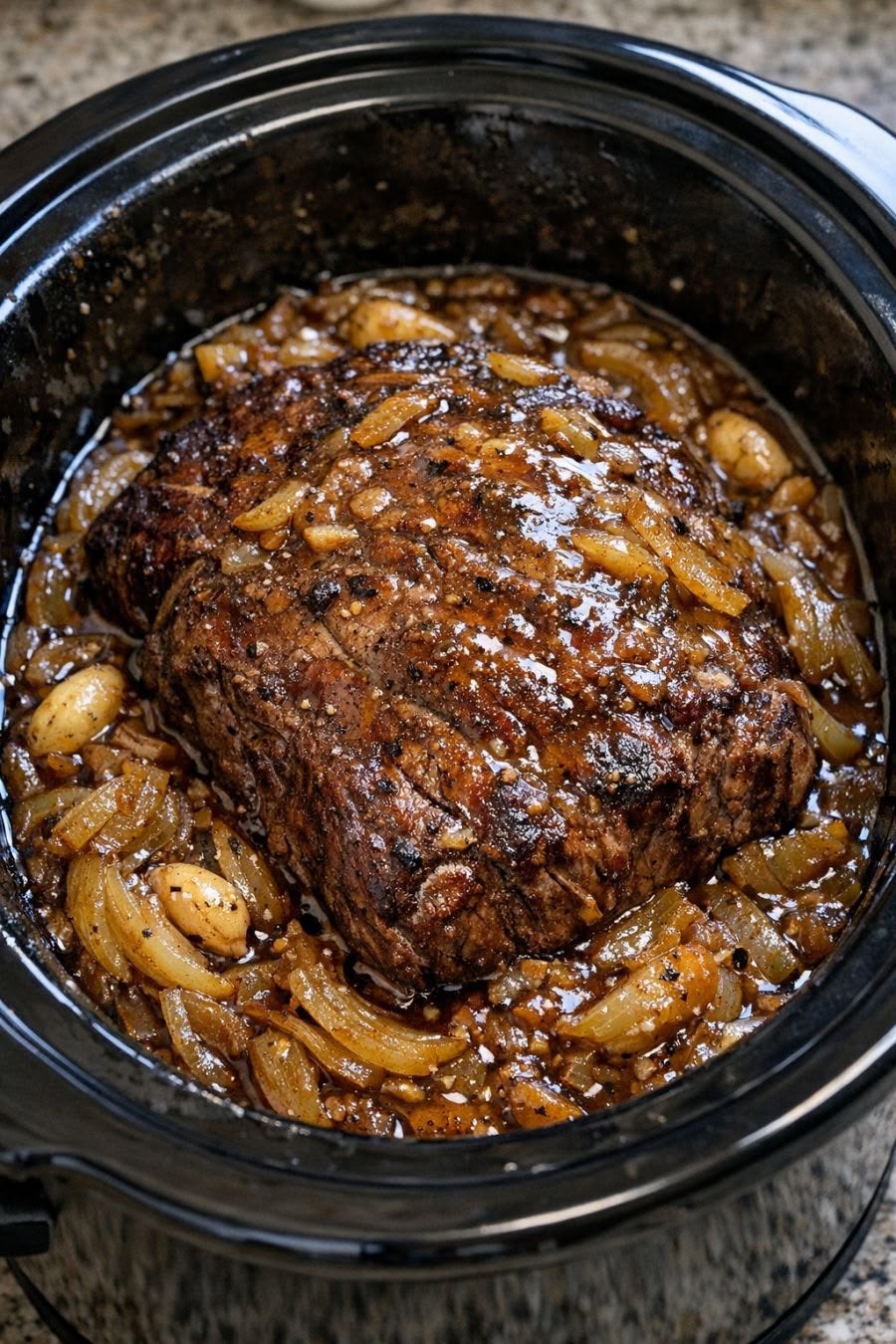
Few meals are as comforting as a tender, slow-cooked pot roast filled with rich beef flavor, sweet caramelized onions, and fragrant garlic. This Slow-Cooker Garlic & Onion Pot Roast is the perfect choice for a cozy family dinner, a Sunday meal, or an easy weeknight dinner that practically cooks itself.
Made with a well-marbled beef chuck roast, whole garlic cloves, thick onion wedges, savory beef broth, Worcestershire sauce, and a touch of Dijon mustard, this recipe creates a deeply flavorful roast with minimal preparation. As the beef cooks slowly, it becomes incredibly tender while the onions soften and the garlic infuses the cooking liquid with a rich, savory aroma.
The best part? You only need about 15 minutes of hands-on preparation. Let your slow cooker handle the rest, then serve the tender beef with mashed potatoes, roasted vegetables, or warm homemade bread for a satisfying, restaurant-style comfort food dinner at home.
Whether you’re looking for an easy slow-cooker beef recipe, a hearty family meal, or a make-ahead dinner for busy days, this garlic and onion pot roast is one you’ll want to make again and again.
📋 Recipe Overview
| Recipe Detail | Information |
| Recipe Name | Slow-Cooker Garlic & Onion Pot Roast |
| Preparation Time | 15 minutes |
| Cooking Time | 8–9 hours on LOW or 4–5 hours on HIGH |
| Total Time | Approximately 8 hours 15 minutes to 9 hours 15 minutes on LOW |
| Servings | 6 |
| Cuisine | American-inspired comfort food |
| Cooking Method | Slow cooker |
| Main Ingredient | Beef chuck roast |
| Flavor Profile | Savory, garlicky, rich, and aromatic |
| Difficulty Level | Easy |
| Best For | Family dinners, Sunday meals, meal prep, and entertaining |
❤️ Why You’ll Love This Recipe
1. Incredibly Tender Beef
Beef chuck roast contains connective tissue and marbling that become tender during slow cooking. After several hours, the meat becomes easy to pull apart with a fork and absorbs the savory flavors of the garlic, onions, and broth.
2. Rich Garlic and Onion Flavor
This recipe uses two types of garlic for extra depth. Whole garlic cloves soften during cooking, becoming mellow and buttery, while minced garlic adds a stronger, more concentrated flavor to the cooking liquid.
Thick onion wedges gradually soften and release their natural sweetness, creating a delicious base for the roast and gravy.
3. Simple Pantry Ingredients
You don’t need expensive ingredients or complicated techniques. Beef broth, soy sauce, Worcestershire sauce, Dijon mustard, dried herbs, and fresh garlic work together to create a flavorful cooking liquid.
4. Minimal Hands-On Cooking
Once you’ve prepared the ingredients and placed everything in the slow cooker, you can leave the roast to cook while you work, relax, or prepare other parts of your meal.
5. Delicious Homemade Gravy
The cooking liquid becomes a savory sauce packed with beef, onion, and garlic flavor. You can serve it as it is or thicken it with a simple cornstarch slurry for a smooth, spoonable gravy.
6. Perfect for Family Gatherings
This slow-cooked beef roast is ideal for Sunday dinner, holiday meals, or casual gatherings. Serve it straight from the slow cooker with your favorite sides for an easy and satisfying meal.
🛒 Ingredients
The following ingredients make approximately six servings.
Main Ingredients
| Ingredient | Quantity | Purpose |
| Beef chuck roast | 3–4 lbs (1.4–1.8 kg) | Creates a tender, rich, and hearty main dish |
| Yellow onions | 2 large, cut into thick wedges | Add sweetness and savory flavor |
| Whole garlic cloves | 10–12 cloves, peeled | Become soft and mellow during cooking |
| Minced garlic | 4 cloves | Adds a concentrated garlic flavor |
| Olive oil or vegetable oil | 2 tablespoons | Helps brown the beef before slow cooking |
| Beef broth | 1 cup (240 ml), preferably low sodium | Provides moisture and a flavorful cooking liquid |
| Worcestershire sauce | 1 tablespoon | Adds savory depth and umami |
| Soy sauce | 2 tablespoons | Contributes saltiness and rich flavor |
| Dijon mustard or tomato paste | 1 tablespoon | Adds complexity and balances the savory ingredients |
| Dried thyme or rosemary | 1 teaspoon | Provides an aromatic herbal flavor |
| Salt | To taste | Enhances the flavor |
| Freshly ground black pepper | To taste | Adds gentle warmth |
Optional Gravy Thickener
| Ingredient | Quantity | Purpose |
| Cornstarch | 2 tablespoons | Thickens the cooking liquid |
| Cold water | 2 tablespoons | Mixes with the cornstarch to create a smooth slurry |
Ingredient note: Dijon mustard gives the cooking liquid a subtle tangy flavor, while tomato paste creates a deeper, more rounded savory taste. Both work well, so choose whichever you prefer.
👩🍳 Step-by-Step Instructions
Step 1: Prepare the Beef
Remove the chuck roast from its packaging and pat it dry thoroughly with paper towels. Removing excess surface moisture helps the beef brown more effectively.
Season all sides generously with salt and freshly ground black pepper.
If the roast is very large or unevenly shaped, you can cut it into two large pieces to help it fit comfortably in your slow cooker. Keep the pieces relatively large to help retain moisture.
Step 2: Sear the Roast for Extra Flavor
Heat the olive oil or vegetable oil in a large skillet over medium-high heat.
Once the oil is hot, carefully place the beef in the skillet. Sear it for approximately 3–5 minutes per side, including the edges where practical, until a deep brown crust develops.
Transfer the browned roast to the slow cooker.
Tip: Searing is optional, but it adds a richer roasted flavor to the finished dish. If you’re short on time, you can place the seasoned beef directly into the slow cooker.
Step 3: Prepare the Garlic and Onions
Peel the 10–12 whole garlic cloves and leave them intact. Cut the yellow onions into thick wedges so they hold their shape better during the long cooking process.
Add the onion wedges and whole garlic cloves around and underneath the beef.
Scatter the minced garlic over the roast and vegetables.
The whole garlic cloves will soften considerably as they cook, while the minced garlic will release its flavor into the broth.
Step 4: Mix the Cooking Liquid
In a small bowl, whisk together the following ingredients:
- 1 cup beef broth
- 1 tablespoon Worcestershire sauce
- 2 tablespoons soy sauce
- 1 tablespoon Dijon mustard or tomato paste
- 1 teaspoon dried thyme or rosemary
Stir until the mustard or tomato paste is evenly distributed.
Pour the mixture around the beef rather than directly over the top. This helps preserve the seasoning on the surface of the roast.
You do not need to completely submerge the meat. The slow cooker will retain moisture as the beef releases its natural juices during cooking.
Step 5: Slow-Cook the Pot Roast
Cover the slow cooker with its lid and choose your preferred cooking setting.
For LOW:
- Cook for approximately 8–9 hours.
- Begin checking for tenderness around the 8-hour mark.
For HIGH:
- Cook for approximately 4–5 hours.
- Start checking for tenderness after about 4 hours.
Cooking time will vary depending on the thickness of the roast, the slow cooker model, and the temperature setting.
Avoid repeatedly lifting the lid because doing so releases heat and can extend the cooking time.
The roast is ready when it is fork-tender and pulls apart easily. For a traditional pot roast, tenderness is more useful than simply checking whether the beef has reached a basic safe cooking temperature.
Step 6: Check the Beef and Rest Briefly
Carefully lift the roast from the slow cooker using sturdy tongs and a large spatula. The meat may be extremely tender and could break apart as you move it.
Transfer it to a serving platter or cutting board and allow it to rest for approximately 5–10 minutes.
If the beef does not pull apart easily, return it to the slow cooker and continue cooking until tender.
Step 7: Make the Garlic and Onion Gravy
If you prefer a thicker gravy, pour the cooking liquid into a saucepan, including the softened onions and garlic if desired.
In a small bowl, whisk together 2 tablespoons cornstarch and 2 tablespoons cold water until smooth.
Bring the cooking liquid to a gentle simmer over medium heat. Gradually whisk in the cornstarch slurry.
Cook for approximately 2–4 minutes, stirring frequently, until the gravy thickens.
If the gravy becomes too thick, add a little beef broth or water. Taste before adding extra salt because the soy sauce and Worcestershire sauce already contribute saltiness.
Slow-cooker alternative: If your slow cooker has a suitable sauté or browning function, you may be able to thicken the liquid directly in the appliance. Otherwise, a saucepan gives you better control.
Step 8: Serve and Enjoy
Slice the roast against the grain or use two forks to pull it into large pieces.
Arrange the beef on a serving platter with the softened onions and garlic. Spoon the warm gravy over the top and serve immediately.
For a classic comfort food dinner, pair it with creamy mashed potatoes, roasted carrots, green beans, or warm dinner rolls.
⭐ Best Tips for the Perfect Pot Roast
Choose the Right Cut of Beef
Beef chuck roast is one of the best choices for slow-cooked pot roast because its marbling and connective tissue help create a tender, flavorful result.
Beef shoulder can also work well. Leaner cuts may become dry or less tender if cooked for the same length of time.
Don’t Skip Searing If You Have Time
Browning the beef creates additional roasted flavors that improve the overall taste of the dish.
Make sure the skillet is hot before adding the meat, and avoid overcrowding the pan. If necessary, sear the roast in two pieces.
Use Plenty of Garlic
The combination of whole and minced garlic gives the recipe a layered flavor.
Whole cloves become soft and mellow, while minced garlic spreads its flavor throughout the cooking liquid.
For a slightly milder result, use 8–10 whole cloves. For a stronger garlic flavor, keep the full amount in the recipe.
Keep the Onion Wedges Thick
Cutting the onions into large wedges helps them retain some texture during the long cooking process.
Very thin slices may break down almost completely, especially if the roast cooks for 8–9 hours.
Avoid Adding Too Much Liquid
A slow cooker traps moisture, and the beef and onions will release additional liquid as they cook.
One cup of broth is a good starting point for this recipe. Adding excessive liquid can dilute the gravy and make the finished dish taste less concentrated.
Always follow your appliance’s minimum-liquid requirements if they differ from this recipe.
Let the Beef Cook Until Tender
Do not remove the roast just because the minimum cooking time has passed.
If it is still firm or difficult to pull apart, continue cooking and check again after 30–45 minutes.
The goal is tender beef that separates easily with a fork.
Taste the Gravy Before Serving
The cooking liquid concentrates as the roast cooks, so taste it before adding extra seasoning.
If the flavor is too strong, add a small amount of unsalted beef broth. If it tastes flat, a little black pepper or a small splash of Worcestershire sauce may help.
🥩 Best Ingredient Options
Beef Chuck Roast
Chuck roast is the recommended choice because it becomes tender during long, moist cooking.
If you use a different cut, adjust the cooking time according to its size and tenderness.
Yellow or Sweet Onions
Yellow onions offer a balanced savory flavor. Sweet onions are another good choice if you prefer a slightly sweeter result.
Red onions can also be used, although they may produce a somewhat different flavor and color.
Fresh Garlic
Fresh garlic provides the best flavor for this recipe.
If you must substitute garlic powder, use it sparingly and adjust to taste. It will not produce the same soft, roasted garlic cloves as fresh garlic.
Beef Broth
Low-sodium beef broth is ideal because soy sauce and Worcestershire sauce already contain salt.
You can use regular beef broth, but taste the gravy carefully before adding more salt.
Dijon Mustard or Tomato Paste
Both options work well, but they create slightly different flavor profiles.
- Dijon mustard: Adds a gentle tang and helps balance the rich beef flavor.
- Tomato paste: Contributes a deeper, more savory taste and a little natural sweetness.
Thyme or Rosemary
Thyme creates a classic, subtle herb flavor, while rosemary has a stronger, pine-like aroma.
You can use a combination of both if you enjoy a more pronounced herbal flavor.
🔄 Recipe Variations
1. Garlic Butter Pot Roast
For a richer finish, stir 1–2 tablespoons of unsalted butter into the hot gravy just before serving.
The butter adds a silky texture and complements the roasted garlic.
2. Slow-Cooker Pot Roast with Potatoes and Carrots
Turn this recipe into a complete one-pot dinner by adding:
- 1 lb baby potatoes or quartered Yukon Gold potatoes
- 3–4 medium carrots, cut into large pieces
- Optional celery stalks, cut into chunks
Place the vegetables beneath and around the roast so they cook in the flavorful broth.
Avoid cutting them too small, as they may become overly soft during a long cooking time.
3. Red Wine Garlic Pot Roast
Replace up to ½ cup of the beef broth with dry red wine for a deeper, more complex flavor.
If you have time, simmer the wine in the skillet after searing the beef to loosen the browned bits, then pour it into the slow cooker with the remaining broth and seasonings.
4. Mushroom and Onion Pot Roast
Add 8 oz (225 g) sliced mushrooms to the slow cooker for an earthy flavor.
For firmer mushrooms, add them during the last 2–3 hours of cooking rather than at the beginning.
5. Spicy Garlic Pot Roast
Add ¼–½ teaspoon crushed red pepper flakes to the cooking liquid.
You can also add a pinch of cayenne pepper if you prefer a more noticeable heat.
6. Gluten-Free Pot Roast
Use certified gluten-free beef broth, Worcestershire sauce, and soy sauce or tamari.
Replace the cornstarch gravy thickener only if needed; cornstarch is naturally gluten-free, but check the package label for any relevant cross-contact information.
7. Rich Tomato Garlic Pot Roast
Use tomato paste instead of Dijon mustard and add 1–2 teaspoons of balsamic vinegar to the cooking liquid.
This variation creates a slightly richer, tangier sauce that pairs particularly well with mashed potatoes or polenta.
🍽️ What to Serve With Garlic & Onion Pot Roast
This tender beef roast pairs beautifully with simple sides that soak up the savory gravy.
| Side Dish | Why It Works |
| Creamy mashed potatoes | Absorb the garlic and onion gravy |
| Roasted baby potatoes | Add a crisp exterior and fluffy center |
| Buttered egg noodles | Provide a comforting base for the shredded beef |
| Steamed green beans | Add freshness and color |
| Roasted carrots | Complement the savory beef with natural sweetness |
| Garlic green beans | Reinforce the garlic flavor without overpowering the dish |
| Creamy polenta | Creates a smooth, hearty accompaniment |
| Steamed rice | Provides a simple base for the gravy |
| Homemade dinner rolls | Perfect for soaking up the cooking juices |
| Simple green salad | Balances the richness of the roast |
Serving idea: For a classic Sunday dinner, serve the pot roast over mashed potatoes with roasted carrots and green beans. Spoon extra gravy over the beef and potatoes just before serving.
⏰ Make-Ahead Instructions
This recipe is especially convenient when you want to prepare dinner ahead of time.
The Day Before Cooking
- Slice the onions and peel the whole garlic cloves.
- Mince the additional garlic.
- Mix the broth, Worcestershire sauce, soy sauce, mustard or tomato paste, and herbs in a separate covered container.
- Refrigerate the prepared ingredients promptly in suitable covered containers.
For the best food safety and texture, keep the raw beef refrigerated at 40°F (4°C) or below until you’re ready to cook.
On Cooking Day
Season and sear the beef, then add it to the slow cooker with the prepared vegetables and cooking liquid.
Cook according to the recipe instructions.
If you want to brown the roast the night before, cool and refrigerate it promptly after searing rather than leaving it at room temperature. Reheat the ingredients only as appropriate for your slow cooker’s instructions, and avoid using a delayed-start setting that leaves raw meat sitting unrefrigerated.
Preparing the Gravy Ahead
You can prepare the gravy after cooking the roast and refrigerate it separately from the beef.
Reheat it gently in a saucepan, stirring occasionally. If it thickens too much in the refrigerator, add a splash of beef broth or water.
🧊 Storage Instructions
Proper storage helps maintain the flavor and quality of leftover pot roast.
Refrigerator
Allow the beef to stop steaming heavily, then transfer it to shallow, airtight containers and refrigerate within 2 hours of cooking.
Store the beef, onions, and gravy together or separately.
Use refrigerated leftovers within 3–4 days.
Best Storage Method
For the most flavorful leftovers:
- Store the beef with some gravy to help prevent it from drying out.
- Keep the container tightly sealed.
- Refrigerate promptly.
- Reheat only the portion you plan to eat.
If the roast is in large pieces, divide it into smaller portions before refrigerating so it cools more quickly.
🔥 Reheating Instructions
Reheating in the Oven
- Preheat the oven to 325°F (165°C).
- Place the beef in an oven-safe dish.
- Add several spoonfuls of gravy or beef broth.
- Cover the dish tightly with foil.
- Heat until the beef reaches an internal temperature of 165°F (74°C).
The time will depend on the portion size, so check the temperature rather than relying only on the clock.
Reheating on the Stovetop
- Place the beef and gravy in a saucepan.
- Add a splash of broth if the gravy is too thick.
- Cover and heat over low to medium-low heat.
- Stir gently and turn the beef occasionally.
- Continue until the meat is heated through to 165°F (74°C).
Avoid boiling the beef vigorously, which can make reheated portions less pleasant in texture.
Reheating in the Microwave
- Place an individual portion in a microwave-safe dish.
- Add a spoonful of gravy or broth.
- Cover loosely with a microwave-safe lid.
- Heat in 1-minute intervals, stirring or turning the meat between intervals.
- Check that the center reaches 165°F (74°C).
Let the portion stand briefly before serving, and check for hot spots.
❄️ Can You Freeze Garlic & Onion Pot Roast?
Yes! This pot roast freezes well, making it a convenient option for future dinners.
How to Freeze
- Allow the cooked beef and gravy to cool sufficiently.
- Divide the roast into meal-sized portions.
- Place the beef in freezer-safe airtight containers or heavy-duty freezer bags.
- Add enough gravy to coat the meat and help protect its texture.
- Label each container with the date.
- Freeze at 0°F (-18°C).
For best quality, use the frozen pot roast within approximately 2–3 months.
How to Thaw
For the best results, thaw the roast in the refrigerator overnight.
You can also use the microwave’s defrost function if you plan to reheat the beef immediately afterward.
Avoid thawing cooked meat on the kitchen counter.
Reheating Frozen Pot Roast
After thawing, reheat the beef gently in a covered saucepan or oven-safe dish with its gravy.
Heat until the center reaches 165°F (74°C). If the sauce has separated slightly, stir it while warming to bring it back together.
⚠️ Common Mistakes to Avoid
1. Choosing a Very Lean Cut
Lean cuts may not develop the same tenderness as chuck roast during slow cooking.
Solution: Choose a well-marbled chuck roast or another suitable slow-cooking cut.
2. Skipping Seasoning
A large piece of beef needs adequate seasoning to bring out its natural flavor.
Solution: Season the meat on all sides before searing. Remember that the soy sauce and Worcestershire sauce also contribute salt.
3. Adding Too Much Broth
Excess liquid can dilute the flavor of the finished gravy.
Solution: Start with the recommended 1 cup of broth and allow the beef and onions to release their natural juices.
4. Lifting the Lid Too Often
Every time you open the slow cooker, heat escapes and the cooking process slows.
Solution: Keep the lid closed and check the beef near the expected end of the cooking time.
5. Stopping Before the Beef Is Tender
Beef chuck may remain firm even after several hours if its connective tissue has not softened sufficiently.
Solution: Continue cooking until the meat pulls apart easily with a fork.
6. Adding Cornstarch Directly to Hot Liquid
Dry cornstarch added directly to hot gravy can form lumps.
Solution: Mix the cornstarch with cold water first, then whisk the slurry gradually into simmering liquid.
7. Making the Gravy Too Salty
Soy sauce, Worcestershire sauce, broth, and additional salt can add up quickly.
Solution: Use low-sodium broth, taste the cooking liquid before seasoning further, and adjust gradually.
8. Cutting the Roast Immediately
Cutting the meat immediately after removing it from the slow cooker can release some of its juices.
Solution: Let the roast rest for 5–10 minutes before slicing or shredding.
📊 Nutrition Estimate
The following values are approximate estimates per serving, assuming six servings and including a portion of the beef, onions, garlic, and cooking liquid. Actual values will vary depending on the size and fat content of the roast, how much rendered fat is discarded, and whether gravy is thickened.
| Nutrient | Estimated Amount Per Serving |
| Calories | 450–600 kcal |
| Protein | 40–50 g |
| Total Fat | 25–40 g |
| Saturated Fat | 9–15 g |
| Carbohydrates | 6–12 g |
| Fiber | 1–2 g |
| Sugars | 2–4 g |
| Sodium | 600–1,000 mg |
These figures are estimates, not laboratory-tested nutrition information. The sodium content may be higher when regular broth or soy sauce is used, and the total calories will depend on the cut of beef and portion size.
❓ Frequently Asked Questions
Can I put raw beef directly into the slow cooker?
Yes. You can place the seasoned raw beef directly into the slow cooker with the onions, garlic, and cooking liquid. Searing is optional, but it adds a deeper roasted flavor.
Should the beef be covered with liquid?
No. The roast does not need to be fully submerged. The slow cooker retains moisture, and the beef and onions release additional juices as they cook.
Use enough liquid to meet your slow cooker’s requirements and create a flavorful cooking base.
Is it better to cook pot roast on LOW or HIGH?
LOW is generally preferable when you have enough time because it allows the beef to cook gradually and become tender.
HIGH is useful when you’re short on time, but the roast still needs to cook until fork-tender. Actual cooking times vary by appliance and roast thickness.
Why is my slow-cooker pot roast still tough?
The most common reason is that the beef has not cooked long enough for its connective tissue to soften.
Return the roast to the slow cooker and continue cooking until it pulls apart easily. Also make sure you’re using a suitable cut, such as chuck roast.
Can I add potatoes and carrots to this recipe?
Absolutely. Add baby potatoes or large potato chunks and thick carrot pieces beneath and around the beef.
Keep the vegetables relatively large so they are less likely to become mushy during the long cooking time.
Can I use garlic powder instead of fresh garlic?
You can use garlic powder in a pinch, but the flavor will be different. Fresh garlic creates the soft, mellow cloves that make this dish especially delicious.
For the best result, use fresh garlic whenever possible.
Can I make the gravy without cornstarch?
Yes. You can serve the cooking liquid as a thin, savory sauce without thickening it.
Alternatively, simmer it uncovered in a saucepan until some of the liquid evaporates and the flavor becomes more concentrated.
Can I use flour instead of cornstarch?
Yes. For a flour-based gravy, whisk approximately 2 tablespoons of all-purpose flour with enough cool water to form a smooth paste, then gradually whisk it into simmering cooking liquid.
Cook the gravy for several minutes to remove the raw flour taste. The texture may be less glossy than a cornstarch-thickened gravy.
Can I prepare this recipe without searing the beef?
Yes. Simply season the roast and place it directly into the slow cooker.
The finished pot roast will still be tender and flavorful, although it may have less of the deep roasted flavor that comes from browning.
How do I know when the pot roast is done?
The best sign for this style of pot roast is tenderness. The beef should pull apart easily with a fork and should not feel firm or rubbery.
A basic safe cooking temperature alone does not guarantee that a chuck roast has become tender enough for shredding.
Can I make this recipe ahead for a dinner party?
Yes. Cook the roast in advance, refrigerate it promptly, and reheat it with the gravy before serving.
The flavors often become even more developed after resting overnight. Reheat the beef to 165°F (74°C) before serving.
What should I do if the gravy is too thin?
Transfer the cooking liquid to a saucepan and simmer it gently to reduce it. Alternatively, whisk in a cornstarch slurry made from 2 tablespoons cornstarch and 2 tablespoons cold water.
Add the slurry gradually so you can control the thickness.
Is this recipe suitable for meal prep?
Yes. Divide the cooked beef, onions, and gravy into individual portions and refrigerate or freeze them.
Pair each portion with a different side, such as mashed potatoes, rice, roasted vegetables, or noodles, for convenient meals throughout the week.
🍽️ Final Thoughts
This Slow-Cooker Garlic & Onion Pot Roast is everything a comforting homemade dinner should be: tender beef, mellow roasted garlic, sweet onions, and a rich gravy that brings the whole meal together.
With just 15 minutes of preparation, simple pantry ingredients, and a slow cooker, you can create a hearty meal that tastes like it took much more effort. Serve it with mashed potatoes and vegetables for a traditional Sunday dinner, or shred the leftovers and use them in sandwiches, wraps, or quick weeknight meals.
For the best results, choose a well-marbled chuck roast, avoid adding too much liquid, and let the beef cook until it is genuinely fork-tender. Finish with the optional garlic and onion gravy, and you’ll have a satisfying comfort food recipe worth keeping in your regular dinner rotation.
Make it once, and this easy garlic pot roast may become one of your favorite slow-cooker meals!