Introduction
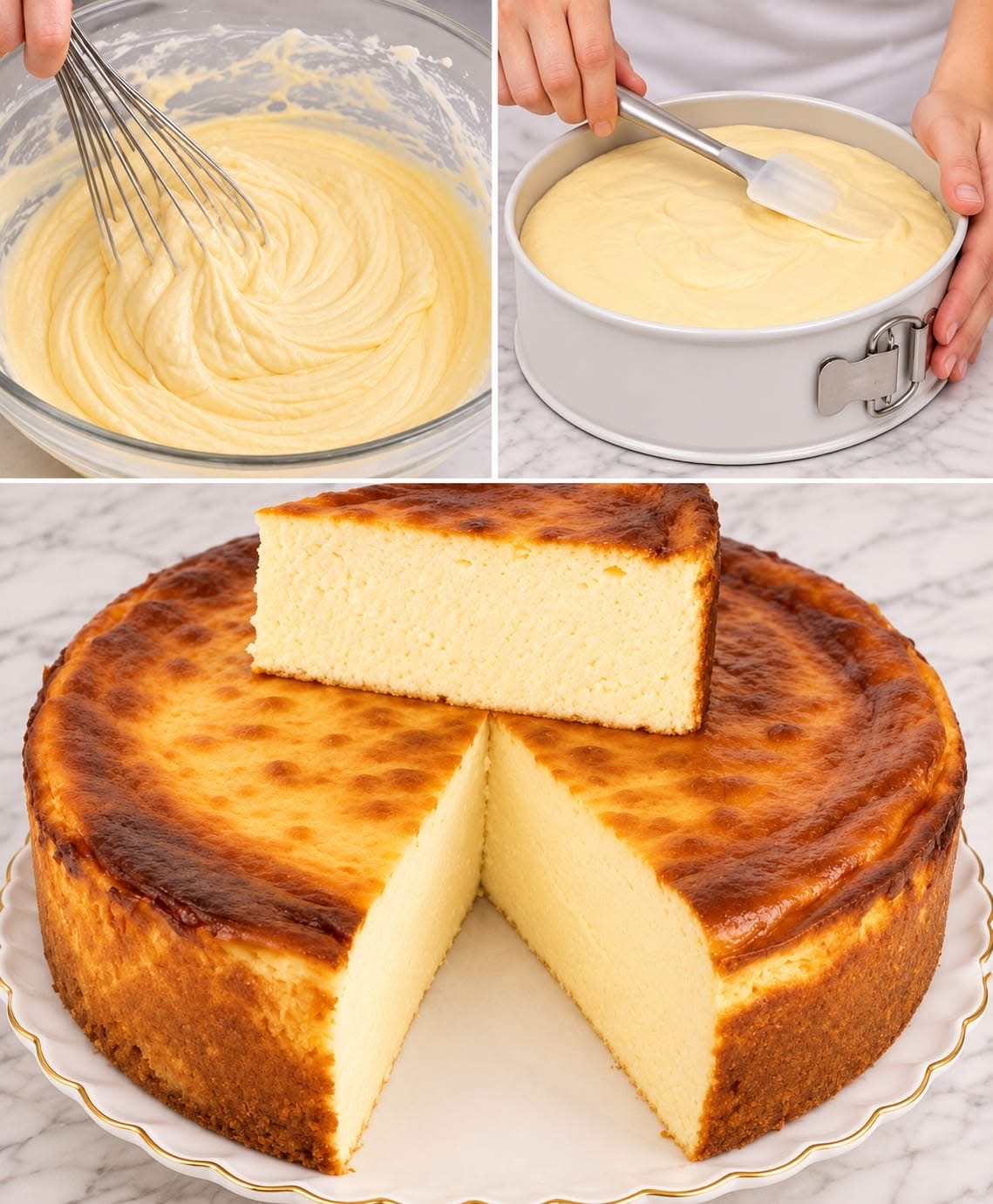
This Golden Baked Cheesecake is a beautiful homemade dessert with a rich, creamy center and a perfectly golden-brown top. Every slice is soft, smooth, and full of delicious vanilla flavor. Made with simple baking ingredients and an easy preparation method, this classic baked cheesecake is perfect for family gatherings, holidays, special occasions, or whenever you’re craving a comforting homemade dessert. Serve it chilled for a wonderfully creamy texture that everyone will love!
Recipe Overview
| Details | Information |
| Preparation Time | 20 minutes |
| Baking Time | 60–70 minutes |
| Cooling Time | 2 hours |
| Chilling Time | 4–6 hours |
| Total Time | About 8 hours |
| Servings | 10–12 |
| Course | Dessert |
| Cuisine | American |
| Difficulty | Easy to Moderate |
Why You’ll Love This Recipe
- Rich and Creamy: A smooth, tender cheesecake with a delicious texture.
- Beautiful Golden Top: The top develops an attractive golden-brown finish.
- Simple Ingredients: Made with everyday baking ingredients.
- Perfect for Special Occasions: Wonderful for holidays, birthdays, and family celebrations.
- Make-Ahead Friendly: Prepare it in advance and chill until ready to serve.
- Easy to Customize: Add fresh fruit, chocolate, caramel, or your favorite toppings.
Ingredients
For the Cheesecake Filling
| Ingredient | Quantity |
| Cream cheese, softened | 24 oz (680 g) |
| Granulated sugar | 1 cup (200 g) |
| Large eggs | 4 |
| Sour cream | 1 cup (240 g) |
| Heavy cream | ½ cup (120 ml) |
| All-purpose flour | ¼ cup (30 g) |
| Vanilla extract | 2 teaspoons |
| Lemon juice | 1 tablespoon |
| Salt | ¼ teaspoon |
For Preparing the Pan
| Ingredient | Quantity |
| Unsalted butter | 1 tablespoon |
| Parchment paper | As needed |
Step-by-Step Instructions
Step 1: Prepare the Oven and Pan
Preheat your oven to 325°F (165°C). Grease a 9-inch springform pan with butter and line the bottom with parchment paper. Lightly grease the sides to help release the cheesecake after baking.
Step 2: Prepare the Cream Cheese
Place the softened cream cheese in a large mixing bowl. Beat with an electric mixer on medium-low speed until completely smooth and creamy. Scrape down the sides of the bowl to remove any lumps.
Step 3: Add the Sugar
Gradually add the granulated sugar and continue mixing until incorporated. Avoid beating at high speed because too much air can cause the cheesecake to rise excessively and crack.
Step 4: Add the Eggs
Add the eggs one at a time, mixing gently after each addition. Make sure each egg is incorporated before adding the next.
Step 5: Add the Remaining Ingredients
Mix in the sour cream, heavy cream, vanilla extract, lemon juice, and salt. Add the flour gradually and mix until the batter is smooth and creamy. Do not overmix.
Step 6: Fill the Springform Pan
Pour the cheesecake batter into the prepared springform pan. Use a silicone spatula to spread the mixture evenly and smooth the surface.
Gently tap the pan against the counter a few times to release large air bubbles.
Step 7: Bake the Cheesecake
Place the pan on the middle oven rack and bake at 325°F (165°C) for approximately 60–70 minutes.
The edges should look set and lightly golden, while the center should still have a gentle wobble. If the top browns too quickly, loosely cover it with aluminum foil.
Step 8: Cool Gradually
Turn off the oven and leave the cheesecake inside with the door slightly open for about 30 minutes. This gradual cooling helps reduce cracking.
Remove the cheesecake and let it cool completely at room temperature.
Step 9: Refrigerate
Cover the cooled cheesecake and refrigerate for at least 4–6 hours, preferably overnight, to allow it to set properly.
Step 10: Slice and Serve
Carefully release the springform pan. Run a warm knife around the edges if necessary, then cut into slices.
Serve chilled and enjoy the rich, creamy texture!
Best Tips for the Perfect Baked Cheesecake
- Use room-temperature cream cheese for a smooth batter.
- Allow eggs and sour cream to reach room temperature before mixing.
- Mix on low or medium-low speed to avoid incorporating too much air.
- Avoid opening the oven door frequently during baking.
- Do not overbake; the center should retain a slight wobble.
- Cool gradually to help prevent cracks.
- Refrigerate thoroughly before slicing.
- Use a warm, clean knife for neat slices.
Best Ingredient Options
Cream Cheese: Full-fat cream cheese provides the richest flavor and creamiest texture.
Sugar: Regular granulated sugar works best for a smooth and balanced sweetness.
Sour Cream: Adds a slight tanginess and helps create a tender filling. Full-fat Greek yogurt can be used as an alternative.
Heavy Cream: Gives the cheesecake a richer, smoother consistency.
Vanilla Extract: Pure vanilla extract adds a delicious bakery-style aroma.
Lemon Juice: A little lemon juice balances the sweetness without making the cheesecake taste strongly of lemon.
Recipe Variations
Lemon Baked Cheesecake: Add extra lemon zest and a little lemon juice for a refreshing citrus flavor.
Chocolate Cheesecake: Mix melted and cooled chocolate into the filling for a rich chocolate dessert.
Strawberry Cheesecake: Serve with fresh strawberries and homemade strawberry sauce.
Caramel Cheesecake: Drizzle salted caramel sauce over each slice before serving.
Berry Cheesecake: Add fresh raspberries, blueberries, or blackberries on top.
Vanilla Bean Cheesecake: Replace vanilla extract with vanilla bean paste for beautiful vanilla flavor.
What to Serve With Baked Cheesecake
This creamy homemade cheesecake pairs beautifully with:
- Fresh strawberries and raspberries
- Blueberry sauce
- Homemade whipped cream
- Chocolate ganache
- Salted caramel sauce
- Fresh fruit salad
- Vanilla ice cream
- A cup of coffee or tea
A simple dusting of powdered sugar or a handful of fresh berries can make every slice look extra special.
Make-Ahead Instructions
This cheesecake is an excellent make-ahead dessert.
Prepare and bake it one day before serving. Allow it to cool completely, cover it tightly, and refrigerate overnight.
The resting time allows the filling to firm up and the flavors to develop, making the cheesecake easier to slice and serve.
Storage
Store leftover cheesecake in an airtight container or cover the springform pan tightly with plastic wrap.
Keep refrigerated at 40°F (4°C) or below and enjoy within 4–5 days.
Avoid leaving cheesecake at room temperature for more than 2 hours.
Reheating
This baked cheesecake is traditionally served chilled, so reheating is unnecessary.
For the best creamy texture, remove individual slices from the refrigerator about 10–15 minutes before serving.
Freezing
This cheesecake freezes well when stored properly.
- Allow the cheesecake to cool completely.
- Refrigerate until fully set.
- Cut into individual slices if desired.
- Wrap each slice tightly in plastic wrap.
- Place the wrapped slices in a freezer-safe container.
- Freeze for up to 2 months for the best quality.
To serve, thaw overnight in the refrigerator.
Common Mistakes to Avoid
1. Using Cold Cream Cheese: Cold cream cheese can create lumps in the batter. Always soften it before mixing.
2. Overmixing the Batter: Excessive mixing incorporates too much air and can affect the final texture.
3. Adding All Eggs at Once: Add eggs individually for a smoother and more consistent filling.
4. Overbaking: Baking too long can make the cheesecake dry. Look for set edges and a slightly wobbly center.
5. Cooling Too Quickly: Sudden temperature changes can encourage cracks. Allow the cheesecake to cool gradually.
6. Skipping Refrigeration: The cheesecake needs sufficient chilling time to become firm enough for clean slices.
7. Cutting While Warm: Always chill completely before slicing to achieve the best presentation.
Nutrition Estimate
Approximate nutritional values per serving, based on 12 servings:
| Nutrient | Amount |
| Calories | 390 kcal |
| Total Fat | 29 g |
| Saturated Fat | 17 g |
| Carbohydrates | 26 g |
| Sugar | 22 g |
| Protein | 7 g |
| Fiber | 0.3 g |
| Sodium | 280 mg |
Nutrition values are estimates and may vary depending on the cream cheese and other ingredients used.
Frequently Asked Questions
1. Why does my baked cheesecake crack?
Cracks can happen because of overmixing, overbaking, or cooling too quickly. Mix gently and allow the cheesecake to cool gradually.
2. How do I know when the cheesecake is ready?
The edges should be set, while the center should still have a slight wobble. It will become firmer as it cools and chills.
3. Can I make this cheesecake without a water bath?
Yes! This recipe can be baked without a water bath. Keep the oven temperature moderate and avoid overbaking.
4. Can I use low-fat cream cheese?
Yes, but full-fat cream cheese generally produces a richer and creamier result.
5. Why is my cheesecake too soft?
It may need more chilling time or may have been slightly underbaked. Refrigerate for at least 4–6 hours before serving.
6. Can I prepare this cheesecake the day before?
Absolutely! Preparing it the day before is recommended because overnight refrigeration improves the texture and makes slicing easier.
7. Can I add fruit to the cheesecake?
Yes! Fresh strawberries, blueberries, raspberries, or fruit sauces make wonderful additions.
8. How do I get clean cheesecake slices?
Use a sharp knife dipped in warm water. Wipe the blade clean between every cut.
Final Thoughts
This Golden Baked Cheesecake is a wonderful homemade dessert that combines a beautifully golden top with a rich, smooth, and creamy center. Its simple ingredients, classic vanilla flavor, and elegant presentation make it perfect for holidays, celebrations, or weekend baking.
Whether you serve it plain or add fresh fruit, chocolate, or caramel sauce, every slice is a delicious treat worth sharing with family and friends!