Introduction
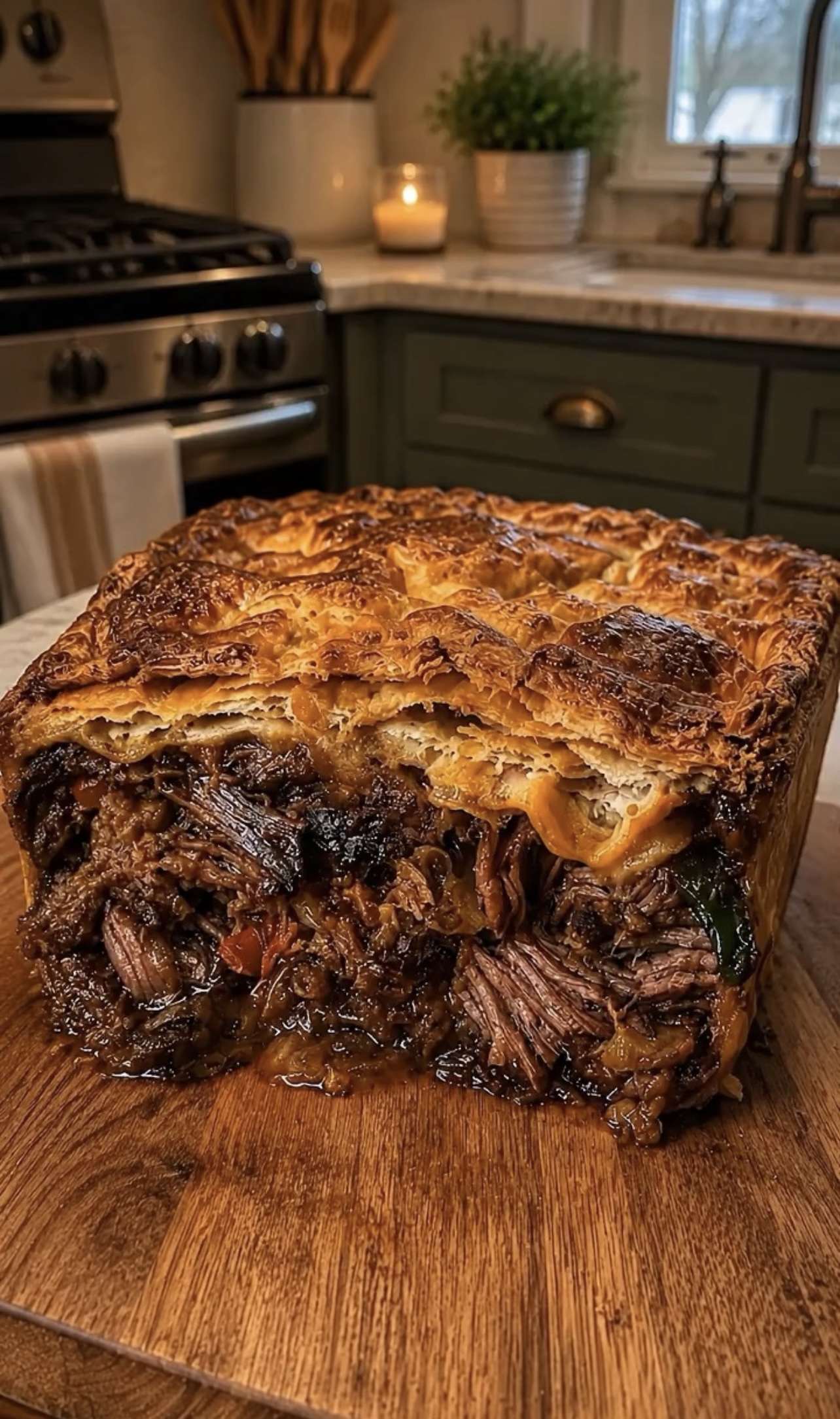
Few comfort foods are as satisfying as a homemade Slow-Braised Beef & Ale Deep-Dish Pie with tender chunks of beef, rich dark gravy, hearty vegetables, and a golden, flaky puff pastry crust. Slowly braised beef chuck is cooked with onions, carrots, celery, garlic, aromatic thyme, and dark ale until the meat becomes wonderfully tender and the sauce develops a deep, savory flavor. Finished with buttery puff pastry baked until crisp and golden, this traditional British-inspired beef pie is the kind of hearty meal that brings everyone to the table.
Although this slow-cooked beef pie takes several hours to prepare, most of the cooking time is hands-off, allowing the flavors to develop while the beef gently simmers. It’s an excellent choice for a cozy family dinner, a weekend meal, or a special gathering when you want to serve something homemade and memorable. Pair each generous slice with creamy mashed potatoes, buttered green peas, or roasted root vegetables for a comforting dinner that tastes like it came straight from a traditional country pub.
📋 Recipe Overview
| Recipe Detail | Information |
| Recipe Name | Slow-Braised Beef & Ale Deep-Dish Pie |
| Prep Time | 30 minutes |
| Braising Time | 2½–3 hours |
| Pastry Baking Time | 30–40 minutes |
| Total Time | Approximately 4–4½ hours, plus cooling |
| Servings | 6–8 |
| Cuisine | British-inspired |
| Cooking Method | Stovetop braising and oven baking |
| Oven Temperature | 390°F (200°C) |
| Main Ingredient | Beef chuck roast or braising steak |
| Pastry | All-butter puff pastry |
| Flavor Profile | Rich, savory, malty, and herbaceous |
| Difficulty Level | Intermediate |
❤️ Why You’ll Love This Recipe
- Fall-apart tender beef: Slow braising transforms inexpensive beef chuck into succulent, flavorful pieces.
- Rich homemade gravy: Dark ale, beef stock, Worcestershire sauce, and tomato paste create a deeply savory sauce.
- Golden, flaky pastry: All-butter puff pastry rises beautifully in the oven and provides a crisp contrast to the tender filling.
- Hearty family comfort food: Generous portions of beef and vegetables make this a satisfying main course.
- Perfect for special occasions: Serve it for Sunday dinner, holiday gatherings, or a cozy weekend meal.
- Make-ahead friendly: The beef filling can be prepared in advance, making final assembly much easier.
- Flexible ingredients: You can adjust the vegetables, herbs, and pastry to suit your preferences.
- Excellent leftovers: The flavors remain delicious the next day, making this a practical option for meal planning.
🛒 Ingredients
This recipe combines simple vegetables, slow-braised beef, and a flavorful ale gravy beneath a crisp pastry lid.
🥩 For the Beef Filling
| Ingredient | Quantity | Purpose |
| Beef chuck roast or braising steak | 3 lb (1.4 kg), cut into 1½-inch chunks | Becomes tender and flavorful during slow cooking |
| All-purpose flour | 3 tablespoons | Helps brown the beef and slightly thickens the gravy |
| Olive oil | 2 tablespoons | Helps sear the beef |
| Unsalted butter | 2 tablespoons | Adds richness to the vegetables and gravy |
| Yellow onions | 2 large, sliced | Provide sweetness and depth |
| Carrots | 3 medium, cut into thick rounds | Add natural sweetness and texture |
| Celery stalks | 3, chopped | Build a savory vegetable base |
| Garlic | 4 cloves, minced | Adds aromatic flavor |
| Tomato paste | 1 tablespoon | Deepens the color and savory flavor of the gravy |
| Stout or dark ale | 1 bottle (12 oz/350 ml) | Adds malty depth to the braising liquid |
| Beef stock | 2 cups (480 ml) | Creates the rich gravy |
| Worcestershire sauce | 2 tablespoons | Adds tangy, savory complexity |
| Fresh bay leaves | 2 | Infuse the sauce with herbal flavor |
| Fresh thyme | 4 sprigs | Adds an earthy, aromatic note |
| Salt | To taste | Enhances the flavor |
| Freshly ground black pepper | To taste | Adds gentle warmth |
🥐 For the Pastry and Assembly
| Ingredient | Quantity | Purpose |
| All-butter puff pastry | 1 sheet, large enough to cover the dish | Creates the golden, flaky pie topping |
| Large egg | 1 | Helps the pastry develop a glossy finish |
| Milk | 1 tablespoon | Loosens the egg wash for easier brushing |
Ingredient note: Choose a puff pastry sheet large enough to cover your deep baking dish. If you prefer a fully enclosed pie, you will need additional pastry for the base and sides.
For the ale, choose a stout or dark ale with a flavor you enjoy drinking. A very bitter beer may produce a more pronounced bitterness in the finished gravy.
👩🍳 Step-by-Step Instructions
Step 1: Prepare and Season the Beef
Cut the beef chuck into roughly 1½-inch chunks, trimming away any unusually large pieces of hard fat or connective tissue.
Pat the beef dry with paper towels. Season generously with salt and freshly ground black pepper, then toss the pieces with the flour until lightly coated.
Drying the beef helps it brown rather than steam, while the flour encourages a rich crust and contributes to the gravy’s texture.
Step 2: Sear the Beef
Heat the olive oil in a heavy Dutch oven or large, oven-safe pot over medium-high heat.
Working in batches, arrange the beef in a single layer and brown it on all sides for approximately 3–4 minutes per batch. Avoid overcrowding the pot because too much meat at once lowers the temperature and prevents proper browning.
Transfer the browned beef to a plate. Repeat with the remaining pieces, adding a small amount of oil if the pot becomes dry.
The browned bits on the bottom of the pot are full of flavor, so leave them in place for the next step.
Step 3: Cook the Vegetables
Reduce the heat to medium and add the butter to the same pot.
Add the sliced onions, carrots, and celery. Cook for 8–10 minutes, stirring occasionally, until the onions soften and begin to turn golden.
Stir in the minced garlic and tomato paste. Cook for another minute, allowing the garlic to release its aroma and the tomato paste to deepen in color.
This vegetable base provides sweetness and complexity, helping balance the rich beef and dark ale.
Step 4: Deglaze the Pot with Dark Ale
Pour the stout or dark ale into the pot. As it bubbles, scrape the bottom with a wooden spoon to release the browned bits left from searing the beef.
Let the liquid simmer for approximately 2–3 minutes.
This step incorporates the caramelized beef flavor into the sauce and allows some of the sharper alcohol aromas to cook off. However, simmering does not guarantee that all alcohol will evaporate.
Step 5: Add the Braising Liquid and Herbs
Return the browned beef and any accumulated juices to the pot.
Add the beef stock, Worcestershire sauce, bay leaves, and thyme sprigs. Stir gently to distribute the ingredients.
Bring the liquid to a gentle simmer. The beef should be mostly surrounded by liquid, but it does not need to be completely submerged.
Taste the liquid and adjust the salt and pepper if necessary, remembering that the sauce will become more concentrated as it cooks.
Step 6: Slow-Braise the Beef
Cover the pot with a tight-fitting lid and reduce the heat to low.
Simmer gently for approximately 2½–3 hours, checking occasionally to make sure the liquid is not boiling aggressively or evaporating too quickly.
The beef is ready when a fork slides into the pieces easily and the meat begins to break apart with gentle pressure.
If the sauce becomes too dry before the beef is tender, add a little extra beef stock or water. If the beef is still firm after three hours, continue cooking until it reaches the desired tenderness.
Step 7: Thicken the Gravy
During the final 20–30 minutes of braising, remove the lid and allow the sauce to reduce gently.
Stir occasionally to prevent sticking. The gravy should become rich and glossy, coating the beef and vegetables rather than pooling like thin soup.
Remove the bay leaves and thyme stems. Taste the filling and adjust the seasoning.
Important: The filling needs to be thick enough to hold its shape inside the pie. If it is still too thin, transfer the meat and vegetables to a bowl and simmer the sauce separately until reduced, then combine them again.
Step 8: Cool the Filling Completely
Remove the pot from the heat and allow the filling to cool before assembling the pie.
For food safety, don’t leave the filling at room temperature for more than two hours. If it needs longer to cool, transfer it to shallow containers and refrigerate it promptly.
A cool filling is essential when using puff pastry because hot filling can melt the pastry’s butter layers before they have a chance to rise in the oven.
If you prepared the filling in advance, refrigerate it and assemble the pie once the filling is cold.
Step 9: Preheat the Oven and Prepare the Dish
Preheat the oven to 390°F (200°C).
Spoon the cooled beef filling into a deep, oven-safe baking dish or pie dish. Spread it evenly, making sure the meat and vegetables are distributed throughout.
Choose a dish that leaves enough space at the top for the pastry lid to rise without touching the oven rack.
If the filling has released a little liquid during cooling, spoon off any excessive watery layer so the pastry does not become soggy.
Step 10: Add the Puff Pastry Lid
Roll out the puff pastry if necessary until it is large enough to cover the top of the baking dish.
Lay the pastry over the filling, allowing a small overhang around the edges. Trim the excess and press the pastry against the rim of the dish with your fingers or a fork.
Cut a small slit in the center to allow steam to escape during baking.
In a small bowl, beat the egg with the tablespoon of milk. Brush the mixture evenly over the pastry, taking care not to let excess egg wash run down the sides, where it may interfere with the pastry rising.
For a decorative finish, lightly score the pastry with a sharp knife without cutting all the way through.
Step 11: Bake Until Golden and Flaky
Place the pie on a baking sheet to catch any bubbling filling.
Bake for 30–40 minutes, or until the pastry has risen and turned deeply golden brown.
If the top browns too quickly before the pastry is fully cooked, loosely cover it with foil for the remaining baking time.
The filling should be bubbling around the edges, and the pastry should look crisp rather than pale or doughy.
Step 12: Rest and Serve
Remove the pie from the oven and let it rest for approximately 10 minutes before serving.
This brief resting period allows the bubbling gravy to settle and makes it easier to portion the pie neatly.
Serve generous slices with creamy mashed potatoes, steamed green peas, or roasted root vegetables. Spoon any extra gravy over the beef or vegetables for a traditional comfort-food dinner.
⭐ Best Tips for the Perfect Beef and Ale Pie
- Choose the right beef: Chuck roast and braising steak contain connective tissue that softens during slow cooking, making them ideal for this recipe.
- Brown the beef in batches: A deep brown crust contributes much more flavor than simply adding raw beef to the braising liquid.
- Use a heavy pot: A Dutch oven distributes heat evenly and helps maintain a gentle simmer.
- Keep the braise gentle: Rapid boiling can cause the liquid to evaporate too quickly before the beef becomes tender.
- Reduce the gravy sufficiently: A thick filling helps the pie hold together and prevents the pastry from becoming soggy.
- Cool the filling before assembly: Cold filling helps puff pastry rise properly and develop distinct flaky layers.
- Keep puff pastry cold: If the pastry becomes soft or greasy while you’re assembling the pie, refrigerate it briefly before baking.
- Allow steam to escape: A small vent in the pastry prevents excessive pressure from building beneath the crust.
- Use egg wash evenly: A thin, even coating encourages a beautiful golden finish.
- Rest before slicing: Waiting 10 minutes makes serving easier and helps the gravy settle.
🥕 Best Ingredient Options
Best Beef for Braising
Beef chuck is an excellent choice because its marbling and connective tissue break down during long, moist cooking.
Other suitable options include:
- Beef shin
- Boneless short rib
- Beef brisket suitable for braising
- Beef stewing steak
Avoid very lean cuts intended for quick cooking because they can become dry or tough during a long braise.
Choosing the Ale
A stout or dark ale creates the deep, malty flavor traditionally associated with beef and ale pie.
- Stout: Offers roasted, coffee-like, and sometimes chocolate-like notes.
- Dark ale: Often provides a more rounded malt flavor.
- Brown ale: Can work well if you prefer a less intense roasted flavor.
Avoid an especially bitter ale if you don’t enjoy bitterness in savory sauces.
Nonalcoholic alternative: Replace the ale with additional beef stock and a small splash of balsamic vinegar, adjusting to taste. The finished gravy will have a different flavor but will still be rich and savory.
Best Pastry for the Pie
All-butter puff pastry is ideal for a flaky, golden lid.
Shortcrust pastry is a good alternative if you prefer a firmer, more traditional pastry texture. For a fully enclosed pie with a pastry base, use pastry specifically suited to supporting a wet filling and allow the filling to cool completely before assembly.
Vegetable Options
The onions, carrots, and celery create a classic savory base, but you can adjust the vegetables to suit your preferences.
- Mushrooms: Add earthy flavor and a meaty texture. Brown them before adding the braising liquid.
- Parsnips: Provide gentle sweetness.
- Leeks: Offer a delicate onion flavor.
- Pearl onions: Add a traditional, hearty touch.
- Peas: Stir in a small amount after braising if you enjoy a little sweetness in the filling.
Avoid adding too many watery vegetables, which can thin the gravy and affect the pastry.
🍽️ Recipe Variations
1. Beef, Ale, and Mushroom Pie
Add 8 oz (225 g) of sliced mushrooms to the pot after browning the beef. Cook until the mushrooms release their moisture and begin to brown before adding the ale.
The mushrooms add an earthy flavor that complements the beef and dark gravy.
2. Classic Beef and Onion Pie
For a more traditional onion-forward filling, add another sliced onion and allow it to soften slowly until golden.
The additional onions create a naturally sweet, savory gravy that pairs beautifully with buttery puff pastry.
3. Beef and Cheddar Pie
For a richer variation, sprinkle a modest amount of mature cheddar over the cooled filling just before adding the pastry lid.
The cheese adds a creamy, savory element, although it will change the texture and richness of the filling.
4. Beef and Root Vegetable Pie
Add diced parsnips or extra carrots to the braising mixture.
Cut the vegetables into similar-sized pieces so they cook evenly, and make sure they are tender before assembling the pie.
5. Peppery Beef and Ale Pie
Increase the freshly ground black pepper and add a small amount of crushed mustard seed or prepared mustard to the gravy.
This variation works particularly well with dark ale and sharp cheddar.
6. Fully Enclosed Beef Pie
Instead of using only a pastry lid, line the base and sides of a deep pie dish with shortcrust pastry, add the cooled filling, and cover with another pastry layer.
Seal the edges, cut a steam vent, and brush with egg wash. Follow the pastry package directions and check that both the top and base are fully cooked.
A fully enclosed pie may require additional pastry and a different baking time.
🥔 What to Serve With Slow-Braised Beef & Ale Deep-Dish Pie
The rich beef gravy and buttery pastry pair best with side dishes that add freshness, texture, or a creamy contrast.
| Side Dish | Why It Works |
| Creamy mashed potatoes | Soak up the rich beef gravy |
| Buttered green peas | Add sweetness and a classic British-inspired touch |
| Roasted carrots | Complement the deep, savory flavor of the beef |
| Steamed green beans | Add freshness and color |
| Roasted parsnips | Provide a sweet, earthy contrast |
| Creamed cabbage | Adds a soft, comforting vegetable side |
| Braised red cabbage | Offers sweetness and acidity to balance the gravy |
| Simple green salad | Provides a lighter, refreshing contrast |
| Buttered new potatoes | Make the meal hearty without competing with the pastry |
| Extra beef gravy | Enhances the savory filling and vegetables |
For a classic pub-style dinner: Serve a generous slice of pie with buttery mashed potatoes, green peas, and extra gravy.
⏰ Make-Ahead Instructions
This recipe is especially suitable for preparing in advance because the beef filling benefits from time to rest and the flavors continue to develop as it cools.
Making the Filling Ahead
- Prepare the beef filling according to the recipe.
- Cook until the beef is fork-tender and the gravy has thickened.
- Remove the bay leaves and thyme stems.
- Transfer the filling to shallow containers and refrigerate promptly.
- Use within 3–4 days, or freeze for longer storage.
Assembling the Pie Ahead
For the best pastry texture, store the filling and puff pastry separately until you’re ready to bake.
When you’re ready to cook, transfer the cold filling to the baking dish, add the pastry lid, brush with egg wash, and bake as directed.
You can assemble the pie shortly before baking, but avoid leaving raw puff pastry sitting on a wet filling for a long period because the bottom surface may become soggy.
If baking the pie directly from a refrigerated state, allow extra time if needed and check that the filling is thoroughly hot before serving.
🧊 Storage Instructions
Store leftover beef and ale pie in an airtight container or cover the baking dish securely once the leftovers have cooled enough for refrigeration.
Refrigerate within 2 hours of cooking and keep at 40°F (4°C) or below.
For best quality and food safety, eat refrigerated leftovers within 3–4 days.
For easier reheating, portion the pie into individual servings before storing. The pastry will gradually soften in the refrigerator, but the rich beef filling should remain flavorful.
Discard leftovers that have been left at room temperature for too long or show signs of spoilage.
🔥 Reheating Instructions
Reheating in the Oven
The oven is the best choice for reheating beef pie while restoring some crispness to the pastry.
- Preheat the oven to 350°F (175°C).
- Place an individual portion in an oven-safe dish, or reheat the whole pie in its original dish if suitable.
- Cover loosely with foil if the pastry is already deeply browned.
- Heat until the center reaches 165°F (74°C).
- Remove the foil during the final few minutes if the pastry needs additional crispness.
An individual portion may take approximately 15–25 minutes, while a whole pie will take longer depending on its depth and starting temperature.
Reheating in an Air Fryer
For individual portions, preheat the air fryer to approximately 325°F (165°C).
Heat for around 5–10 minutes, checking the center and continuing as needed until it reaches 165°F (74°C). Cover the exposed pastry loosely with foil only if the appliance manufacturer permits it and the foil can be secured safely.
Reheating in the Microwave
Place a portion on a microwave-safe plate and heat in short intervals until the center reaches 165°F (74°C).
The microwave reheats the filling quickly, but the pastry will be softer. For a better texture, finish the portion briefly in a hot oven or air fryer.
❄️ Freezing Instructions
You can freeze the cooked beef filling or the fully baked pie.
Freezing the Beef Filling
- Prepare the filling and allow it to cool promptly.
- Transfer it to freezer-safe containers.
- Label with the date and freeze at 0°F (-18°C) or below.
- For best quality, use within approximately 2–3 months.
Thaw the filling in the refrigerator before assembling the pie.
Freezing the Fully Baked Pie
- Allow the pie to cool safely.
- Divide it into individual portions if desired.
- Wrap the portions tightly or place them in airtight freezer-safe containers.
- Freeze for best quality within approximately 2–3 months.
Thaw in the refrigerator before reheating when practical. Reheat until the center reaches 165°F (74°C).
The pastry may not be quite as flaky after freezing and thawing, but reheating in the oven can help restore some crispness.
⚠️ Common Mistakes to Avoid
1. Skipping the Beef Searing Step
Adding unbrowned beef directly to the braising liquid misses the deep, caramelized flavor that makes this pie special. Take the time to brown the meat in batches.
2. Boiling the Beef Too Aggressively
A vigorous boil can reduce the liquid too quickly and leave the beef tough before the connective tissue has softened. Maintain a gentle simmer.
3. Using Beef That Is Too Lean
Lean cuts may become dry during prolonged cooking. Choose chuck, shin, or another cut intended for slow braising.
4. Leaving the Gravy Too Thin
A watery filling can make the pastry soggy and cause the pie to fall apart when served. Reduce the sauce until it coats the meat and vegetables.
5. Adding Pastry to Hot Filling
Hot filling can melt the pastry’s butter layers before baking. Cool the filling completely before covering it with puff pastry.
6. Using Too Much Ale
The recipe uses one 12 oz (350 ml) bottle. Adding substantially more liquid without adjusting the stock or reducing the sauce can produce a thin filling.
7. Choosing an Overly Bitter Beer
Some ales can create a strong bitter flavor after reduction. Choose a balanced stout or dark ale, or use beef stock with a splash of balsamic vinegar as a nonalcoholic alternative.
8. Forgetting the Steam Vent
Without a vent, steam can build up beneath the pastry and interfere with the crust’s texture. Cut a small slit in the center before baking.
9. Skipping the Resting Time
Cutting the pie immediately can allow the hot gravy to run out. Rest the pie for about 10 minutes before serving.
10. Reheating Without Checking the Center
The pastry may look hot before the filling has reached a safe temperature. Always check that reheated leftovers reach 165°F (74°C) in the center.
📊 Nutrition Estimate
The following values are approximate estimates per serving, assuming the pie is divided into 8 servings and prepared with the listed ingredients. Actual values vary depending on the beef’s fat content, the pastry brand, the amount of gravy consumed, and portion size.
| Nutrient | Estimated Amount per Serving |
| Calories | 650–800 kcal |
| Protein | 38–48 g |
| Total Fat | 35–48 g |
| Saturated Fat | 14–20 g |
| Carbohydrates | 35–45 g |
| Fiber | 3–5 g |
| Total Sugars | 5–8 g |
| Sodium | 650–1,000 mg |
These estimates cover the pie itself and do not include additional mashed potatoes, vegetables, or extra gravy. Using a smaller portion or serving more vegetables alongside the pie can change the overall nutritional balance of the meal.
❓ Frequently Asked Questions
What is the best cut of beef for beef and ale pie?
Beef chuck roast is an excellent choice because it contains connective tissue and marbling that soften during slow cooking. Beef shin, braising steak, and boneless short rib can also work well.
Can I make beef and ale pie without alcohol?
Yes. Replace the ale with additional beef stock and add a small splash of balsamic vinegar to provide some acidity and depth. The flavor will be different from a traditional ale pie but still delicious.
Does the alcohol cook out of the ale?
Not necessarily. Some alcohol evaporates during cooking, but the amount remaining depends on the cooking time, temperature, and cooking method. If you need to avoid alcohol completely, use the nonalcoholic alternative.
Why is my beef still tough after three hours?
The beef may need more time. Toughness often means the connective tissue has not fully broken down. Continue simmering gently and check every 20–30 minutes until the meat is fork-tender.
Can I use store-bought puff pastry?
Absolutely. Store-bought all-butter puff pastry makes this recipe much easier and produces a delicious flaky crust. Keep it refrigerated until you’re ready to use it.
Can I prepare the beef filling the day before?
Yes. Prepare the filling, cool it promptly, and refrigerate it in a covered container. Assemble the pie with the pastry shortly before baking for the best crust texture.
How do I prevent soggy puff pastry?
Make sure the gravy is thick, the filling is completely cool, and the pastry remains cold before baking. A steam vent also helps prevent excess moisture from collecting beneath the crust.
Can I make this pie with a pastry base?
Yes. Use additional shortcrust pastry or a suitable puff pastry recipe to line the dish. Make sure the filling is cold before assembly, and follow the pastry instructions for blind-baking or baking a filled pie if needed.
What should I serve with beef and ale pie?
Mashed potatoes, buttered peas, green beans, roasted carrots, and braised cabbage are excellent choices. A fresh salad can also balance the richness of the pastry and gravy.
How long do leftovers last?
Refrigerated leftovers should be eaten within 3–4 days when stored promptly at 40°F (4°C) or below. Reheat until the center reaches 165°F (74°C).
🍽️ Final Thoughts
This Slow-Braised Beef & Ale Deep-Dish Pie is a wonderful example of traditional comfort food: tender beef, sweet onions and carrots, aromatic herbs, and rich, glossy gravy tucked beneath a beautifully golden puff pastry crust. Although the slow-braising process takes time, the preparation is straightforward, and the result is a hearty homemade meal that feels special enough for guests while remaining perfect for a relaxed family dinner.
For the best results, brown the beef thoroughly, simmer it gently until fork-tender, reduce the gravy until rich, and let the filling cool completely before adding the pastry. Serve each slice with creamy mashed potatoes, green peas, or roasted vegetables, and enjoy a classic beef pie that is warming, satisfying, and full of deep, savory flavor.