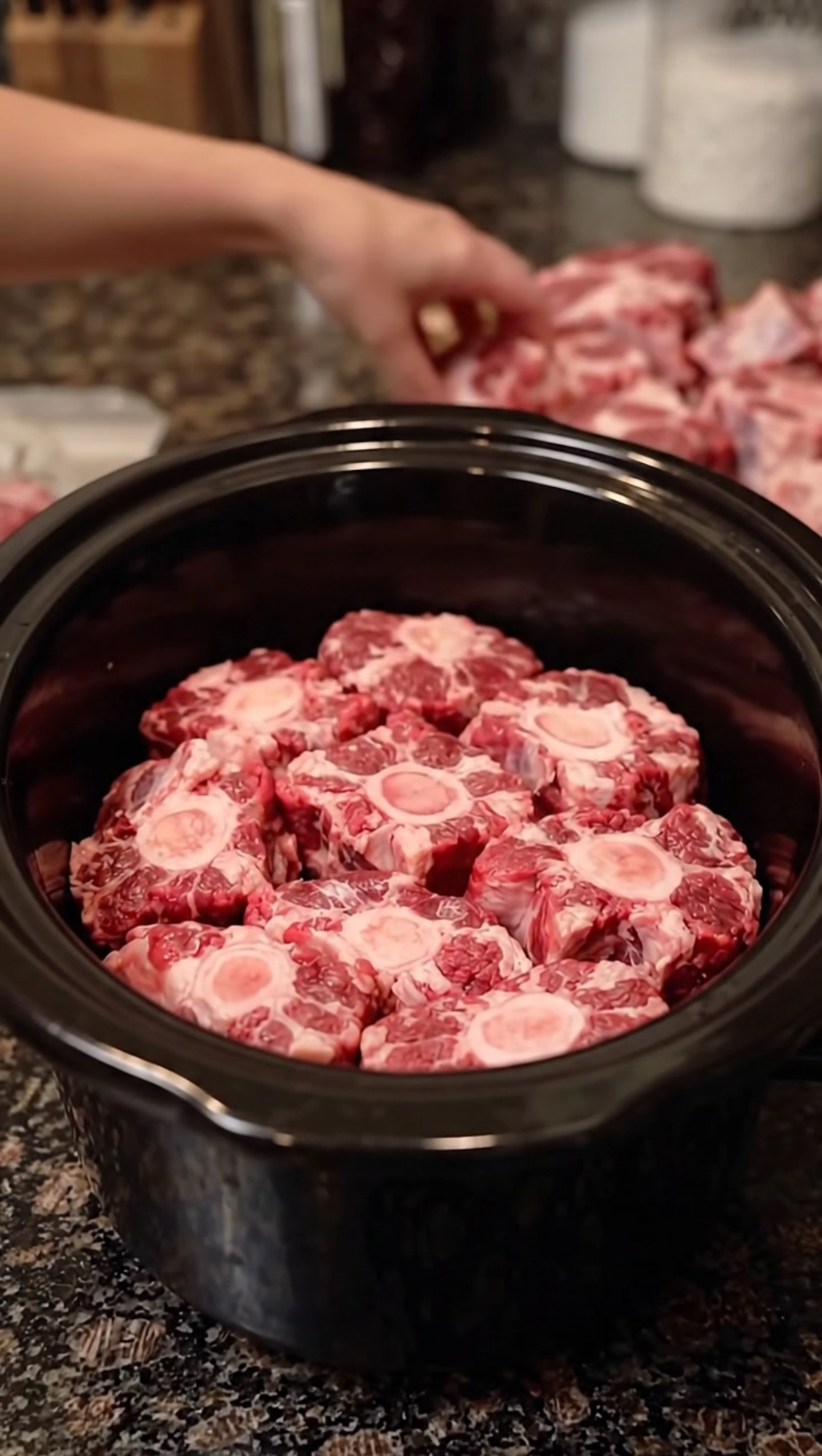
Slow Cooker Beef Bone Broth Recipe: Easy Homemade Beef Stock
Introduction
This slow cooker beef bone broth recipe is an easy way to turn beef marrow bones and connective tissue into a rich, savory homemade broth. Slowly cooked with vegetables, garlic, and herbs, this comforting kitchen staple is perfect for soups, stews, sauces, and healthy meal prep. With simple ingredients and minimal hands-on preparation, you can make flavorful beef bone broth at home while controlling the salt, seasoning, and overall ingredients.
Recipe Overview
| Recipe Details | Information |
| Recipe Name | Slow Cooker Beef Bone Broth |
| Cuisine | American-inspired, versatile |
| Preparation Time | 20 minutes |
| Roasting Time | 30–45 minutes, optional |
| Cooking Time | 12–24 hours on LOW |
| Total Time | Approximately 12½–25 hours |
| Servings | 8–12 cups, depending on reduction |
| Cooking Method | Slow cooker or crockpot |
| Main Ingredient | Beef marrow and joint bones |
| Difficulty | Easy |
| Flavor | Rich, savory, and aromatic |
| Dietary Style | Gluten-free when all ingredients are verified gluten-free; naturally low in carbohydrates |
| Best Uses | Soups, stews, sauces, gravies, and meal prep |
Why You’ll Love This Recipe
1. Easy preparation: You only need a few minutes to prepare the ingredients before letting your slow cooker do most of the work.
2. Rich, homemade flavor: Beef bones, garlic, vegetables, and herbs create a savory broth that tastes excellent in homemade soups and stews.
3. Budget-friendly cooking: Making beef bone broth at home is a practical way to use suitable beef bones and prepare several servings from one batch.
4. Customizable ingredients: You can control the amount of salt, choose your favorite herbs, and adjust the flavor to suit your family’s preferences.
5. Perfect for meal prep: Prepare a large batch and divide it into portions for quick weeknight dinners, sauces, and other homemade meals.
6. A versatile kitchen staple: Use this homemade beef broth instead of water when cooking rice, lentils, vegetables, or grains to add extra savory flavor.
7. Convenient storage: Refrigerate a small portion for immediate use and freeze the remainder for future recipes.
Ingredients
The ingredients below create a balanced, savory beef bone broth. For the best results, combine marrow bones with collagen-rich knuckle or joint bones.
Main Ingredients
| Ingredient | Quantity | Purpose |
| Beef marrow bones | 2 pounds | Add richness and beef flavor |
| Beef knuckle or joint bones | 1–2 pounds | Help produce a fuller-bodied broth |
| Cold water | 10–12 cups, as needed | Forms the broth base |
| Onion | 1 large | Adds sweetness and savory depth |
| Carrots | 2 medium | Provide mild sweetness |
| Celery | 2 stalks | Add aromatic flavor |
| Garlic | 4 cloves | Enhances the savory taste |
| Apple cider vinegar | 2 tablespoons | Adds acidity to the cooking liquid |
Herbs and Seasonings
| Ingredient | Quantity | Notes |
| Bay leaves | 2 | Add a subtle herbal aroma |
| Whole black peppercorns | 1 teaspoon | Provide gentle warmth |
| Fresh thyme | 2–3 sprigs | Adds earthy flavor |
| Fresh rosemary | 1 small sprig, optional | Gives the broth a stronger herbal note |
| Fresh parsley stems | A few, optional | Add a fresh, aromatic flavor |
| Salt | To taste, preferably after cooking | Helps control the final sodium content |
| Tomato paste | 1 tablespoon, optional | Adds savory depth and color |
Ingredient note: Use a combination of marrow bones and bones containing connective tissue. Marrow bones contribute richness, while knuckle and joint bones help the broth develop a gelatinous texture when chilled.
Step-by-Step Instructions
Step 1: Prepare the Beef Bones
Inspect the beef bones and remove any loose fragments. If necessary, briefly rinse them under cold running water and pat them dry with clean paper towels.
For a richer flavor, ask your butcher for beef marrow bones, knuckle bones, or meaty beef shank bones cut into slow-cooker-friendly pieces.
Step 2: Roast the Bones for Better Flavor
Preheat your oven to 425°F (220°C).
Arrange the bones in a roasting pan in a single layer. Roast for 30–45 minutes, turning them halfway through, until they develop a deep brown color.
This step is optional, but roasting creates a richer, more complex beef flavor. Skip it if you prefer a lighter broth or want to simplify the preparation.
Step 3: Prepare the Vegetables
Peel and quarter the onion. Roughly chop the carrots and celery, then lightly crush the garlic cloves.
Large pieces are ideal because the vegetables will cook for many hours. There is no need to chop everything finely.
Step 4: Fill the Slow Cooker
Place the beef bones inside a large slow cooker or crockpot. Add the onion, carrots, celery, garlic, bay leaves, peppercorns, thyme, and any optional herbs.
Pour in the apple cider vinegar and add the tomato paste if desired.
Step 5: Add Water
Pour in approximately 10–12 cups of cold water, or enough to cover the bones while staying below the slow cooker’s maximum fill line.
The exact amount depends on the size and shape of your appliance. Avoid overfilling the cooker, and follow the manufacturer’s instructions.
Step 6: Cook the Beef Bone Broth
Cover the slow cooker and cook on LOW for approximately 12–24 hours, following the appliance manufacturer’s guidance for prolonged cooking.
Check that the cooker operates normally and maintain safe handling practices throughout preparation. Do not leave the appliance running longer than its recommended operating limits.
The broth should gradually develop a rich beef aroma and savory flavor. The final color may range from golden brown to deep brown, especially if the bones were roasted.
Step 7: Strain the Broth
Turn off the slow cooker and carefully remove the large bones using sturdy tongs.
Strain the liquid through a fine-mesh sieve into a heat-safe container to remove the vegetables, herbs, peppercorns, and small loose particles.
Avoid handling hot bones with bare hands, and use caution when moving the heavy slow cooker insert.
Step 8: Cool and Store Safely
Transfer the broth into smaller, shallow containers to help it cool quickly. Refrigerate promptly, within two hours of cooking, and keep your refrigerator at 40°F (4°C) or below.
Once the broth is thoroughly chilled, you can remove the solidified fat from the surface if desired.
Your homemade beef bone broth is now ready to use in soups, stews, sauces, gravies, and other everyday recipes.
Best Tips
Choose a combination of bones. Marrow bones add richness, while knuckle bones and joints help create a broth with more body.
Roast before slow cooking. Roasting the bones at 425°F (220°C) for 30–45 minutes adds a deeper, more developed flavor.
Keep the seasoning flexible. If you plan to use the broth in different recipes, add little or no salt during cooking and season individual dishes later.
Avoid excessive water. Too much water can dilute the flavor. Add enough to cover the bones while remaining within the slow cooker’s safe fill limit.
Do not expect a fixed amount of gelatin. The final consistency depends on the bones, connective tissue, water ratio, and cooking conditions. Broth that stays liquid after refrigeration can still be perfectly usable.
Strain carefully. A fine-mesh sieve helps remove small bone fragments and cooked vegetable pieces.
Cool promptly. Divide large batches into shallow containers and refrigerate them within two hours. Do not leave the broth on the counter until it reaches room temperature.
Use salt strategically. A lightly seasoned broth is easier to adapt for low-sodium recipes, soups, and sauces.
Best Ingredient Options
Best Beef Bones
| Bone Type | Best Use | Expected Result |
| Marrow bones | Rich, savory broth | Fuller flavor and some fat |
| Knuckle bones | Gelatin-rich broth | More body when chilled |
| Joint bones | Traditional bone broth | Good connective tissue content |
| Meaty beef shanks | Beef-forward flavor | More pronounced meatiness |
| Oxtail | Rich specialty broth | Deep flavor and gelatin |
| Mixed beef bones | Everyday homemade broth | Balanced flavor and texture |
For a balanced result, use several types of bones rather than relying entirely on marrow bones.
Best Vegetables and Seasonings
| Ingredient | Recommended Option | Why It Works |
| Onion | Yellow onion | Classic savory flavor |
| Carrots | Fresh whole carrots | Gentle sweetness |
| Celery | Fresh celery stalks | Traditional broth aroma |
| Garlic | Fresh garlic cloves | Adds depth |
| Herbs | Thyme and bay leaves | Complement beef flavor |
| Pepper | Whole black peppercorns | Mild spice without ground residue |
| Acid | Apple cider vinegar | Adds acidity to the cooking liquid |
| Salt | Fine sea salt or table salt | Easy to adjust at the end |
Best Equipment
| Equipment | Purpose |
| Large slow cooker | Maintains a consistent cooking environment |
| Roasting pan | Browns bones before cooking |
| Tongs | Safely handles hot bones |
| Fine-mesh sieve | Strains the finished broth |
| Heat-safe shallow containers | Helps with rapid cooling |
| Freezer-safe containers | Stores extra portions |
A slow cooker with a capacity large enough for your bones and water is essential. Never force the lid closed or exceed the manufacturer’s recommended fill level.
Recipe Variations
1. Roasted Beef Bone Broth
Roast the bones and vegetables before adding them to the slow cooker. This produces a deeper, more robust flavor that works especially well in beef stew, gravy, and French onion soup.
2. Low-Sodium Beef Bone Broth
Leave out the salt during cooking and season the finished broth only when needed. This gives you more control over sodium intake, particularly when using the broth in several recipes.
3. Garlic and Herb Beef Broth
Add extra garlic, thyme, rosemary, and parsley stems. This version pairs well with vegetable soup, roasted vegetables, and homemade pan sauces.
4. Ginger Beef Bone Broth
Add a few slices of fresh ginger and a small amount of coriander seed. This aromatic variation works well in noodle soups and recipes inspired by Asian cuisines.
5. Vegetable-Enhanced Beef Broth
Include a small amount of leek, mushrooms, or additional celery for extra flavor. Avoid adding excessive quantities of strongly flavored vegetables, which can overpower the beef.
6. Meaty Beef Stock
Use a higher proportion of meaty beef shanks rather than relying exclusively on marrow bones. The finished liquid may have a more pronounced beef flavor and is particularly useful for soups and gravies.
7. Concentrated Beef Broth
Use a lower water-to-bone ratio, provided everything fits safely inside the cooker, to produce a more concentrated flavor. You can also reduce strained broth in a separate saucepan on the stovetop if desired.
Watch the liquid carefully during stovetop reduction and season only after reducing, since the flavor and sodium concentration can intensify.
What to Serve With Beef Bone Broth
Homemade beef bone broth is versatile enough to serve on its own or as part of a larger meal.
| Food | Serving Idea |
| Crusty bread | Serve with a warm cup of broth |
| Vegetable soup | Use broth as the liquid base |
| Beef stew | Add broth for savory depth |
| Rice or quinoa | Replace some or all of the cooking water with broth |
| Lentil soup | Use broth to enhance the flavor |
| Egg noodles | Combine with broth for a simple noodle soup |
| Roasted vegetables | Add a small amount of broth to a pan sauce |
| Mashed potatoes | Use a little broth to add savory flavor |
| Homemade gravy | Use strained broth as the liquid base |
| Braised beef | Use broth as part of the braising liquid |
For a balanced meal, pair broth-based dishes with vegetables, whole grains, and a suitable protein source.
Make-Ahead Instructions
Slow cooker beef bone broth is an excellent meal-prep recipe because most of the cooking time requires little hands-on work.
The day before cooking: Check your ingredients, prepare the vegetables, and arrange the seasonings. Keep cut vegetables refrigerated in a covered container.
On cooking day: Roast the bones if desired, add all ingredients to the slow cooker, and cook according to the recipe.
After cooking: Strain the broth and divide it into shallow containers for safe cooling and storage.
For busy weekdays: Portion the cooled broth into quantities that match your usual recipes. One-cup portions are useful for sauces and grains, while larger portions work well for soups and stews.
Avoid leaving raw bones or prepared broth at room temperature for extended periods. Refrigerate perishable ingredients promptly and follow safe food-handling practices.
Storage
Proper storage helps maintain the quality and safety of homemade beef bone broth.
| Storage Method | Recommended Time | Instructions |
| Refrigerator | 3–4 days | Store at 40°F (4°C) or below in covered containers |
| Freezer | Best quality within 2–3 months | Use airtight, freezer-safe containers |
| Countertop | No more than 2 hours after cooking | Refrigerate promptly rather than storing at room temperature |
The refrigerator and freezer times assume the broth was handled and cooled safely. If the broth has been left out too long or shows signs of spoilage, discard it rather than tasting it to check.
Label each container with the preparation date so you can keep track of your homemade broth.
Reheating
Reheat only the amount of beef bone broth you plan to use.
Stovetop method: Pour the broth into a saucepan and heat over medium heat, stirring occasionally, until it reaches a rolling boil.
Microwave method: Place the broth in a microwave-safe container with enough room for expansion. Heat in short intervals, stirring between intervals, until it reaches a rolling boil.
For leftovers and refrigerated broth, reheat to 165°F (74°C) as a practical food-safety target. Stir thoroughly to distribute the heat evenly.
Avoid repeatedly cooling and reheating the entire batch. Instead, store smaller portions and reheat each portion as needed.
Freezing
Freezing is the most convenient way to preserve extra homemade beef bone broth beyond the refrigerator storage period.
- Cool the broth promptly in shallow containers.
- Transfer the cooled broth to freezer-safe containers or heavy-duty freezer bags.
- Leave sufficient headspace for expansion, especially when using rigid containers.
- Label each portion with the name and date.
- Freeze promptly at 0°F (-18°C) or below.
For easy meal prep, freeze broth in one-cup portions or in ice cube trays for small amounts used in sauces.
Thaw frozen broth in the refrigerator, or reheat it directly from frozen in a saucepan if your cookware and method allow it. Do not thaw broth on the countertop.
For best flavor and quality, use frozen broth within 2–3 months, although it may remain safe longer when continuously stored at 0°F (-18°C) or below.
Common Mistakes to Avoid
1. Using only marrow bones
Marrow bones provide richness, but a broth made entirely from them may be fattier and less gelatinous than expected. Combine them with knuckle or joint bones for a more balanced result.
2. Adding too much water
Excess water can weaken the beef flavor. Start with enough water to cover the bones while keeping within the appliance’s maximum fill line.
3. Skipping roasting when you want a deep flavor
Roasting is optional, but it contributes significantly to the rich, browned flavor of traditional beef stock. If you prefer a lighter broth, skipping this step is perfectly reasonable.
4. Adding too much salt
Broth can become overly salty when used in sauces or reduced. Season lightly at first and adjust the flavor when preparing the final dish.
5. Cooking beyond appliance recommendations
Long cooking does not automatically mean better broth. Follow your slow cooker’s instructions and use a suitable cooking duration.
6. Expecting broth to be jelly-like every time
A gelatinous texture depends on the types of bones and the concentration of extracted gelatin. Liquid broth is not necessarily a sign of failure.
7. Leaving the broth to cool for too long
A large container of hot broth can cool slowly. Divide it into shallow containers and refrigerate promptly to reduce food-safety risks.
8. Storing broth for too long
Refrigerated broth should generally be used within 3–4 days. Freeze the excess rather than extending the refrigerator storage period.
9. Forgetting to strain the broth
Small bone fragments and vegetable pieces can remain in the liquid. Strain thoroughly before storing or serving.
10. Treating bone broth as a complete meal
Bone broth may provide some protein, but its nutritional profile varies. Pair it with a variety of foods to create balanced meals.
Nutrition Estimate
The following table provides an approximate nutritional estimate for one cup (240 ml) of homemade beef bone broth. Actual values depend on the types of bones, cooking time, water ratio, fat removal, and final concentration.
| Nutrient | Approximate Amount per Cup |
| Calories | 40–100 kcal |
| Protein | 5–10 g |
| Total Fat | 1–5 g |
| Carbohydrates | 0–3 g |
| Fiber | 0 g |
| Sodium | Varies with seasoning |
| Collagen-derived gelatin | Variable; not reliably estimated without analysis |
These estimates are illustrative rather than laboratory-verified nutrition facts. The recipe’s exact serving count and nutritional values depend on the final volume of strained broth.
If you are following a medically prescribed diet or monitoring sodium, protein, or other nutrients, calculate the nutritional content of your actual ingredients and serving size.
Frequently Asked Questions
1. How long should beef bone broth cook in a slow cooker?
A common starting point is 12–24 hours on LOW, depending on the bones, desired flavor, and appliance instructions. Always follow the manufacturer’s guidance for prolonged cooking.
2. Do I need to roast beef bones before making broth?
No. Roasting is optional, but it adds a deeper, more savory flavor and darker color. You can skip it for a simpler preparation.
3. Why add apple cider vinegar to beef bone broth?
Apple cider vinegar adds acidity to the cooking liquid and is traditionally used in bone broth recipes. However, it does not guarantee substantial mineral extraction, and the resulting mineral content varies.
4. Why did my beef bone broth turn into jelly in the refrigerator?
The broth may contain gelatin formed when collagen-rich connective tissues break down during cooking. Gelatin thickens as it cools, so a jelly-like texture is common in concentrated broth.
5. What if my broth stays liquid after refrigeration?
It can still be perfectly good broth. The consistency depends on the bones, the amount of connective tissue, the water ratio, and the final concentration.
6. Can I make beef bone broth without vegetables?
Yes. You can cook beef bones with water and optional seasonings alone. Vegetables add aromatic flavor, but they are not essential to the basic method.
7. Should I add salt before or after cooking?
Adding salt at the end makes it easier to control the flavor. This is particularly useful when you plan to reduce the broth or use it in recipes that already contain salt.
8. How long does homemade beef bone broth last in the refrigerator?
Generally, 3–4 days when refrigerated promptly and kept at 40°F (4°C) or below. Freeze extra portions for longer storage.
9. Can I freeze beef bone broth?
Yes. Cool it safely, portion it into freezer-safe containers, leave headspace for expansion, and freeze at 0°F (-18°C) or below. For best quality, aim to use it within 2–3 months.
10. Is beef bone broth healthy?
It can contribute fluids and some protein to your diet, depending on the preparation. However, its nutritional content varies, and claims that it cures joint problems, improves skin, or treats digestive conditions are not established by strong clinical evidence.
11. Can I use beef bone broth instead of beef stock?
Yes. Homemade beef bone broth can replace beef stock in many soups, stews, gravies, and sauces. Its flavor and texture may differ from conventional beef stock, so adjust seasoning and liquid quantities as needed.
12. Is this recipe suitable for meal prep?
Absolutely. Prepare a batch, cool it promptly, and divide it into portions for later use. Refrigerate portions you will use within 3–4 days and freeze the remainder.
13. Can I make beef bone broth in a pressure cooker?
Yes, if your pressure cooker has a suitable broth or stock method. Follow the manufacturer’s instructions for liquid limits, pressure cooking, and safe pressure release. Cooking times differ significantly from those of a slow cooker.
14. Why is there a layer of fat on top of my broth?
Fat from the beef bones can rise to the surface during cooking. After refrigeration, it usually solidifies and can be removed with a spoon if you prefer a leaner broth.
Final Thoughts
This slow cooker beef bone broth recipe is a practical way to prepare a flavorful homemade staple using beef bones, vegetables, and simple seasonings. With minimal preparation, flexible ingredients, and convenient freezer storage, it fits easily into everyday cooking and weekly meal prep. Use it as a base for nourishing soups, hearty stews, homemade gravy, and other delicious recipes, and adjust the ingredients to suit your taste and dietary preferences.